
TIMBER CONCERNS • CORNWALL
Woodworm in Cornwall
Holes in timber? Dust beneath a beam? Understand the evidence before deciding what to do.
Perish-A-Pest does not currently undertake woodworm treatment. We can refer woodworm enquiries to Wood Rescue Cornwall, who have agreed to take these enquiries.
Contact Wood Rescue Cornwall about woodworm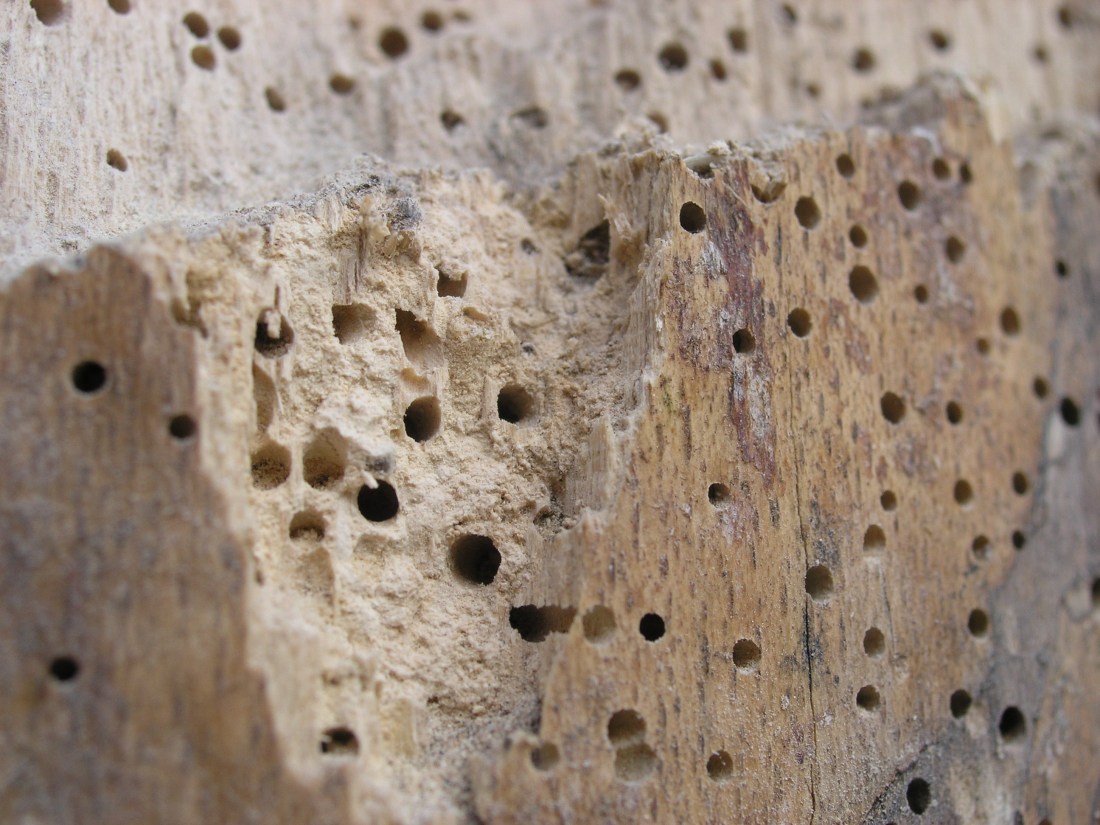
UNDERSTANDING WHAT YOU HAVE FOUND
Woodworm is a description, not one species.
The term usually describes timber damage caused by the larvae of wood-boring beetles. The insects, timber and conditions all matter. A small hole or a pile of dust is a clue to investigate, rather than a diagnosis on its own.
Exit holes
Adults leave holes as they emerge from timber. Note their shape, size and distribution. Nail holes, fixings and other damage can look similar; hole size alone cannot reliably identify the insect.
Dust or frass
Frass is material associated with insect feeding, including waste and timber particles. Photograph deposits before cleaning. Ordinary sawdust, building work or disturbed old material can confuse the picture.
Affected timber
Look at accessible floorboards, joinery, furniture, roof timbers and joists. Record whether signs are localised or widespread, and whether damp, leaks or soft timber are also present.
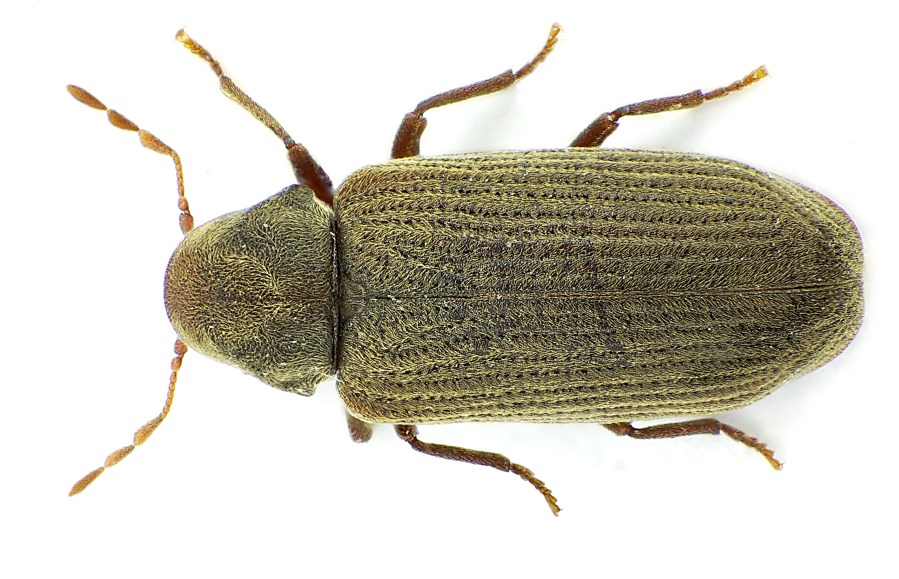
ONE EXAMPLE, NOT A UNIVERSAL DIAGNOSIS
Why correct identification matters
The common furniture beetle is one wood-boring species found in buildings. Adults are small brown beetles, around 2.5–5 mm long, with fine lengthwise grooves on their wing cases and a hood-like thorax that hides the head from above.
Its larvae feed inside timber. Adult emergence commonly leaves small round holes, around 1.5–2 mm wide. Other insects can leave similar evidence, and a beetle found indoors may have come from stored food rather than timber.
Do not choose a treatment from a photograph alone. A specialist assessment can consider the insect, timber type, extent of damage and surrounding conditions together.
Natural History Museum furniture-beetle guide ↗Old holes or a current problem?
Exit holes remain after beetles have left. Their presence does not, by itself, show that an infestation is still active.
Evidence that may be historic
Long-standing holes, old damage and records of previous work can help establish the history. They are useful context, but cannot settle the question without considering the rest of the evidence.
Evidence worth investigating now
Newly appearing holes, recurring fresh-looking deposits or emerging adult beetles may indicate recent activity. Keep dated photographs and any safely collected specimen so a specialist can assess them.
Neither “there is dust” nor “there is no dust today” is a reliable stand-alone test. Old frass can be dislodged, and hidden activity may not be obvious during one visit. Identification and, where appropriate, monitoring help avoid unnecessary treatment.
ASSESS FIRST
The right answer is not always to apply a chemical.
Assessment should establish whether activity is current, how much timber is affected and whether underlying moisture or building defects need attention. Treatment, repairs or monitoring should follow the findings.
Older buildings and roof spaces
Tell the specialist about listed status, historic timber, previous treatments and any known or suspected bat roost. Appropriate conservation and bat-protection advice may be needed before treatment or disruptive work.
If timber appears badly weakened, or floors or beams are moving or sagging, avoid loading or disturbing the area and obtain appropriate professional building advice. A pest photograph cannot assess structural safety.
Historic England: timber treatments and pest control ↗What to do before you contact someone
- Record the evidence. Take a close-up with a ruler for scale and a wider photograph showing the location. Note when holes or dust were first noticed.
- Keep useful information. Mention previous timber treatments, reports, recent building work, leaks and whether new signs have appeared.
- Leave the timber undisturbed. Avoid applying products, filling holes or sanding away evidence before assessment. Do not enter unsafe lofts or lift structural timber to investigate.
- Ask for an assessment. Discuss identification, current activity, timber condition and the reason for any proposed work. Confirm scope, costs and terms directly with the specialist before proceeding.
WOODWORM ENQUIRIES & TREATMENT IN CORNWALL
Who does what?
Perish-A-Pest does not currently undertake woodworm treatment. Woodworm enquiries received through us can be referred to Wood Rescue Cornwall, who have agreed to take them. Wood Rescue Cornwall is a separate business, not a Perish-A-Pest employee or division.
Their public website describes woodworm inspection and treatment across Cornwall. Any specialist assessment, quotation or treatment is discussed directly with them. You are also free to contact them yourself.
Perish-A-Pest’s credentials relate to Perish-A-Pest; they are not credentials or endorsements of Wood Rescue Cornwall.
Ask Perish-A-Pest about a woodworm referral →Wood Rescue Cornwall
Contact: Ian
07966 874908
Ian@woodrescuecornwall.co.uk
More help identifying a pest
Customer Advice Centre · Insect guides · Frequently asked questions
Image credits: Beech timber photograph — Kai-Martin Knaak; Common furniture beetle — Siga. Both via Wikimedia Commons, CC BY-SA 3.0, commercially reusable with attribution and share-alike conditions. Photographs are unmodified and displayed proportionally. These illustrative images do not depict a Perish-A-Pest or Wood Rescue Cornwall job.

